
Unbranded vs Branded Batteries: How OEM Buyers Save 20-30% on UPS Backup Power
A factory insider guide to unbranded AGM batteries. Learn where the 20-30% cost savings come from, how quality stays identical, and when white-label batteries make business sense for UPS, telecom, and data center projects. Factory direct pricing from Naradex.
The Hidden Truth About Battery Branding
Walk through any battery factory in China and you will notice something that surprises most first-time buyers: the same production line, same workers, and same raw materials produce batteries that end up wearing completely different labels. A 12V 100Ah AGM battery stamped "Brand X" at $85 per unit might roll off the exact same conveyor belt as an unbranded unit at $62.
This is not a secret in the industry. It is how battery manufacturing works at scale. Understanding why identical batteries cost 20-30% less without a brand label is the key to smarter procurement for UPS system integrators, telecom operators, and distributors building their own product lines.
Where Does the 20-30% Price Difference Come From?
The cost structure of a branded battery versus an unbranded one breaks down into several components. Here is a realistic breakdown based on a 12V 100Ah AGM battery at factory level:
The raw materials, labor, testing, and overhead are identical. The entire price gap comes from three things: label printing, marketing costs amortized into each unit, and the margin premium that brand recognition commands. None of these affect battery chemistry, plate thickness, or cycle life.
Same Production Line — What That Actually Means
At Naradex (Best Battery Tech Co., Ltd), our Foshan factory operates 12 production stages from plate casting to final OQC inspection. When we produce an ND12-100 branded battery versus an unbranded 12V 100Ah unit, here is what stays identical:
Identical materials: High-Sn low-Ca lead alloy grids, PAM (Positive Active Material) additives for 30% more cyclic life, advanced AGM separators, dilute high-purity sulfuric acid electrolyte, fire-resistant ABS containers.
Identical process: Plate casting, paste mixing and application, curing and drying, assembly and stacking, welding, container insertion, electrolyte filling, formation charging, sealing, and testing.
Identical QC gates: Every battery, branded or unbranded, passes through IQC (raw material testing), PQC (in-process quality control with first inspection, acceptance inspection, and full inspection), and OQC (outgoing quality control confirming zero defects). Our ISO 9001:2015 quality management system does not have a "skip QC for unbranded" option.
Identical specs: 10-year design floating life at 25C, 800 cycles at 50% DOD, less than or equal to 3% self-discharge per month, operating temperature range of -25C to 60C. The data sheet is the same because the battery is the same.
The only difference is the final step: whether a Naradex label is heat-applied to the front panel, or the case ships clean.
When Unbranded Batteries Make Business Sense
Unbranded batteries are not for everyone. Here is a clear framework for when they are the right choice:
Best fit for unbranded:
System integrators who build UPS cabinets under their own brand name benefit most from unbranded batteries. They need reliable cells at the lowest cost and apply their own service warranty. Distributors building a private-label battery line can source unbranded batteries, add their label (we offer OEM logo printing at 20ft container quantity), and capture the brand margin themselves. Budget-driven projects where the end user never sees the battery label, such as telecom BTS cabinet installations and server room UPS battery shelves, are ideal for unbranded products. Sample and trial orders also benefit since our unbranded line has lower MOQ for buyers testing market response.
Better fit for branded (Naradex ND series):
End-user facing sales where the brand on the battery builds customer confidence are better served by branded products. When buyers need the full suite of branded documentation including CE/IEC certificates with the brand name and branded datasheets and packaging, the ND series is the right choice. Long-term repeat customers who value brand continuity across multi-year projects also benefit from the branded line.
The OEM Process: From Inquiry to Your Brand on the Battery
For buyers who want the economy of unbranded batteries plus the value of their own brand, our OEM process works like this:
Step 1: Specification confirmation. You tell us the models, quantities, and any custom requirements (terminal type, case color, voltage range).
Step 2: Sample production. We produce 2-5 sample units with your logo mockup for approval. Turnaround is 7-10 days.
Step 3: Label design. Send us your logo file (AI or PDF preferred). We design the label layout, you approve the proof.
Step 4: Bulk production. Standard lead time is 20 days for a half-container order and 30 days for a full 20ft container.
Step 5: QC and shipping. Full IQC/PQC/OQC inspection. MSDS documentation for safe international shipping by sea and air.
Minimum OEM order for logo printing is one 20ft container. For smaller orders, unbranded (clean case) batteries are available with flexible MOQ.
Quality Verification: How to Confirm You Are Getting Real Factory Quality
Smart buyers do not take "same quality" on faith. Here is how to verify:
Request the same test reports. Ask the factory for IEC 60896-21/22 test reports for both the branded and unbranded units. If the test data matches (capacity, internal resistance, cycle life curves), the batteries are from the same production process.
Check certifications. Our ISO 9001:2015, ISO 14001:2015, and ISO 45001:2018 certifications cover the entire factory operation, not specific product labels. CE and IEC compliance applies to the battery design, not the brand name.
Compare internal resistance. A 12V 100Ah battery from our line should measure 5.3 milliohm or less regardless of branding. If the unbranded unit measures significantly differently, it is not from the same production run.
Visit the factory. We welcome buyer visits to our 20,000 square meter facility in Foshan. Watch both branded and unbranded batteries come off the same line. Over 400 employees working the same process for every unit.
Real-World Cost Impact: A Project Example
Consider a typical telecom BTS backup installation requiring 480 units of 12V 100Ah batteries:
That $9,600 savings on a single project, with zero compromise on battery chemistry, cycle life, or warranty coverage. For a distributor placing 4-6 such orders per year, the annual savings reach $38,000-$57,000.
Available Unbranded Models
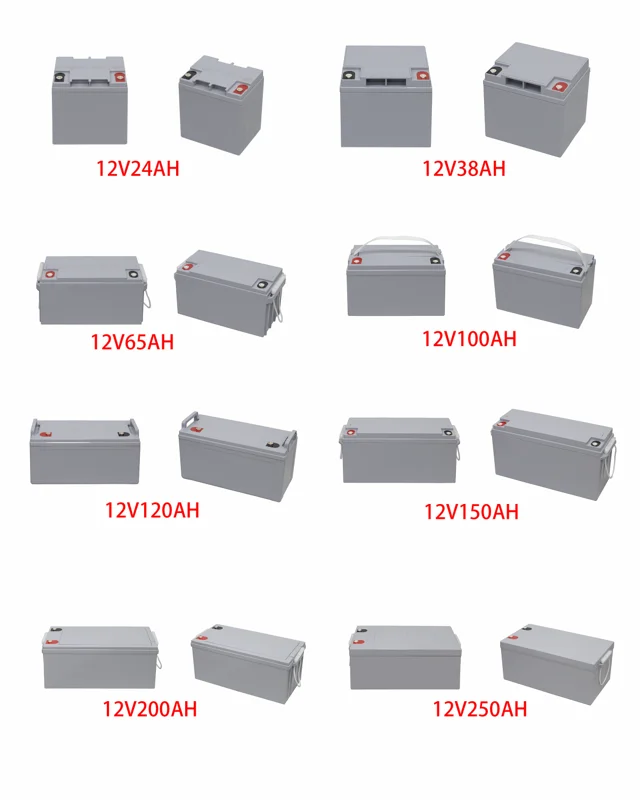
Our unbranded economy line covers the most popular capacities in 12V AGM:
All models feature the same 10-year design floating life, 800 cycles at 50% DOD, and are compatible with all major UPS brands including Schneider Electric, ABB, EATON, Huawei, DELTA, Vertiv, and more.
The Bottom Line
The battery industry's pricing structure rewards brand recognition, not superior chemistry. When a factory produces identical batteries on the same line with the same materials and QC process, the unbranded version delivers the same backup power performance at 20-30% lower cost.
For procurement managers, the question is not whether unbranded batteries are "good enough." They are the same battery. The real question is whether your application needs the brand label on the front panel, or whether that 20-30% belongs in your margin instead.
Ready to compare pricing? Contact our team for a side-by-side quotation on branded ND series versus unbranded economy batteries. We reply within 12 hours with full technical specifications and FOB pricing.