
UPS Battery Backup Time Calculator: Runtime Formula & Sizing Guide
Calculate UPS backup time: (Ah × Voltage × 0.85) ÷ Load. Ready-made sizing tables for 500VA to 10kVA, 12V & 2V configs. Free calculator + real examples. Battery manufacturer, MOQ 100 pcs →
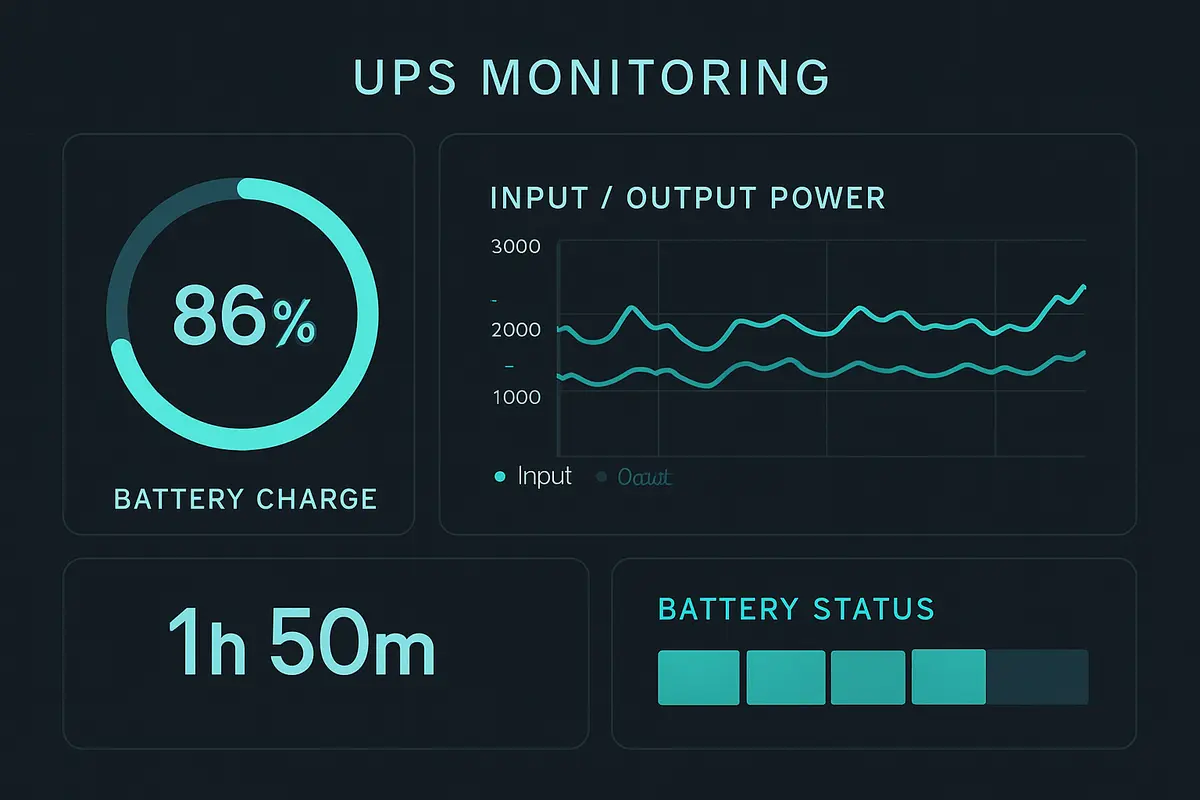
The Backup Time Formula
The basic formula for calculating UPS battery backup time:
Backup Time (hours) = (Battery Capacity in Ah × System Voltage × Efficiency) ÷ Load in Watts
Where: - **Battery Capacity (Ah):** Rated capacity at C10 or C20 rate - **System Voltage:** Total battery string voltage (e.g., 48V, 192V) - **Efficiency:** 0.85 for lead-acid batteries (accounts for losses) - **Load (Watts):** Actual power consumption of your equipment
Quick Reference Tables
Single 12V Battery Runtime
*Based on 12V system, 0.85 efficiency factor. Actual results vary with discharge rate and temperature.*
48V Battery Bank Runtime (4 × 12V in series)
48V 2V Cell Bank Runtime (24 × 2V cells in series)
Important Factors That Affect Actual Runtime
1. Discharge rate effect: Battery capacity decreases at higher discharge rates. A battery rated 100Ah at C10 (10-hour rate) may only deliver 65Ah at C1 (1-hour rate). The tables above use the C10 rated capacity.
2. Temperature effect: At 0°C, expect only ~65% of rated capacity. At -15°C, expect ~50%. Size your battery bank for the coldest expected operating temperature.
3. Age effect: Batteries lose capacity over time. A 5-year-old battery may have only 85% of its original capacity. An 8-year-old battery may have 70-75%.
4. End-of-discharge voltage: The tables assume discharge to 1.75V per cell (10.5V for 12V battery). Some UPS systems shut down at higher voltages, reducing usable runtime.
Sizing Example: Office Server Room
Given: - Load: 3 kW (two servers + network equipment + cooling) - Required backup: 30 minutes (bridge to generator) - UPS: 192V DC bus (16 × 12V in series)
Calculation: Ah = (3000W × 0.5hr) ÷ (192V × 0.85 × 0.8 aging) = 11.5 Ah
Recommendation: ND12-26 (26 Ah) provides comfortable margin with 2× the minimum requirement. Configuration: 16 × ND12-26 in series.
Conclusion
Battery backup time is determined by three things: battery capacity, system voltage, and load power. Use the tables above for quick reference, or contact Naradex for a detailed sizing calculation specific to your application.
We provide free battery sizing assistance — send us your UPS specifications and load profile, and we'll recommend the optimal configuration.
Related Resources
- VRLA Battery Technology: Types & Applications — Deep dive into AGM vs gel VRLA technology - How to Charge AGM Batteries Correctly — Voltage settings and temperature compensation - AGM vs Lead Acid Battery — Understand the differences before choosing - VRLA Battery Maintenance Guide — Extend battery life with proper care - AGM Battery Lifespan: How Long Do They Last? — Real-world lifespan data - Our 12V AGM Battery Products — View the Naradex ND12 series